
by Matilda Whitaker
Even with 8 prior studio albums under their belt, Alynda Segarra’s solo project ‘Hurray for the Riff Raff’ finds a way to sonically evolve through new, beautifully refined Americana record ‘The Past Is Still Alive’. It’s a feat for any artist to improve upon their previous work. But to create a body of work more impressive than an album that landed itself on Best of 2022 Lists from The New York Times, Rolling Stone, NPR Music, Mojo and Uncut is something that should be held in mighty high regard.
Segarra is no stranger to bending and playing with genre and theme in their work. 2017’s ‘The Navigator’ is a concept album exploring the Puerto Rican immigrant experience, while their last album ‘Life On Earth’ ponders the future and fate of humanity. It’s surprising, then, to jump to an album as intimate and heartbreakingly personal as ‘The Past Is Still Alive’. Described as a way of “grappling with time, memory, love and loss’ , the record seems to act as a way of processing grief and striving for liberation, being recorded only a month after Segarra lost their father. This liberation is achieved to a massive degree through the sheer emotional intensity of the lyrical content of ‘The Past Is Still Alive’. Opening track ‘Alibi’ is a yearning reflection on addicted childhood friends that pleads with them to join the land of the living while they still can; ‘Colossus of Roads’ is written in the style of an urgent dispatch after the Club Q shooting in Colorado. It’s through these heavy themes that ‘The Past Is Still Alive’ shines, not just as a sign of profound competence in songwriting, but more so as a musical memory box- a synoptic view of Segarra’s experience, and a well paced, thematic journey detailing the manifold tales of Segarra’s voyages.
And this comes through structurally as well. Meandering between the sullen and sunny, ‘The Past Is Still Alive’ is pieced together beautifully, a skill that often manifests itself in artists with this much experience in the industry. Alynda Segarra knows how to write a complete body of work, and even though the record is only 36 minutes in length, it seems to cover so much ground that it can seem like it could plausibly be three times this. It’s only natural that Segarra should know how to render the fat off of a record at this point in their career, and yet I’m still positively astounded at how compact the album is.
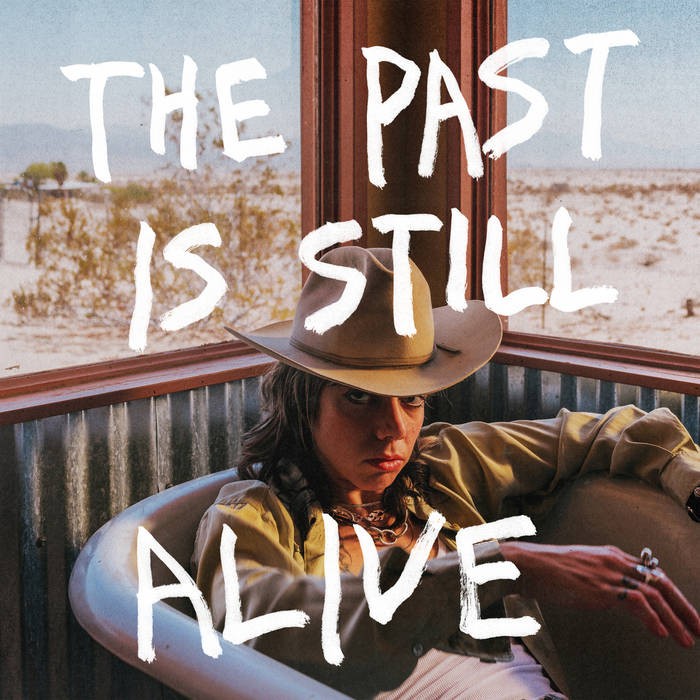
Sonically, the record is reminiscent of and will be familiar to fans of Waxahatchee, but still leaves enough room for ‘Hurray For The Riff Raff’ to create their own sound, and while vocally the record isn’t groundbreaking or massively innovative, the album still seems to be a marker and a future staple of Segarra and their individuality as an artist. Identity is something that separates Segarra and other artists in the genre, as not only do they identify as non-binary, they also flirt with themes of national identity in and through the length of the EP; in particular, the conflict between Segarra’s identity as a Puerto Rican immigrant and as an American. In the best way possible, though, the album is distinctly American, not only in genre but in writing too. ‘Buffalo’ uses the iconic American mammal as a potent metaphor for a budding romance, and whether it can survive the extinction society attempts to put it through.
In many ways, the record bends the rules of what one can write about in the context of an Americana folk record, while staying true to the sonics of others in the modern folk scene, a balancing act not easy to pull off. In spite of this, Hurray for the Riff Raff expands the definition of what it means to be an Americana artist, and in doing so creates their strongest album to date.
Hurray for the Riff Raff commence their UK and Ireland tour in Dublin on May 10th, and finish it in London on the 17th.
Featured image by Tommy Kha.
 Bacchanalia Magazine
Leave a comment